Moscow, RSL, Ms. Guenzburg 53
מוסקווה, אוסף גינצבורג, כתב יד 53, עמ' 206
Jacob ben Hayyim Zemah Ilan
About the Ilan
TextGrid URI of the Editiontextgrid:4101n
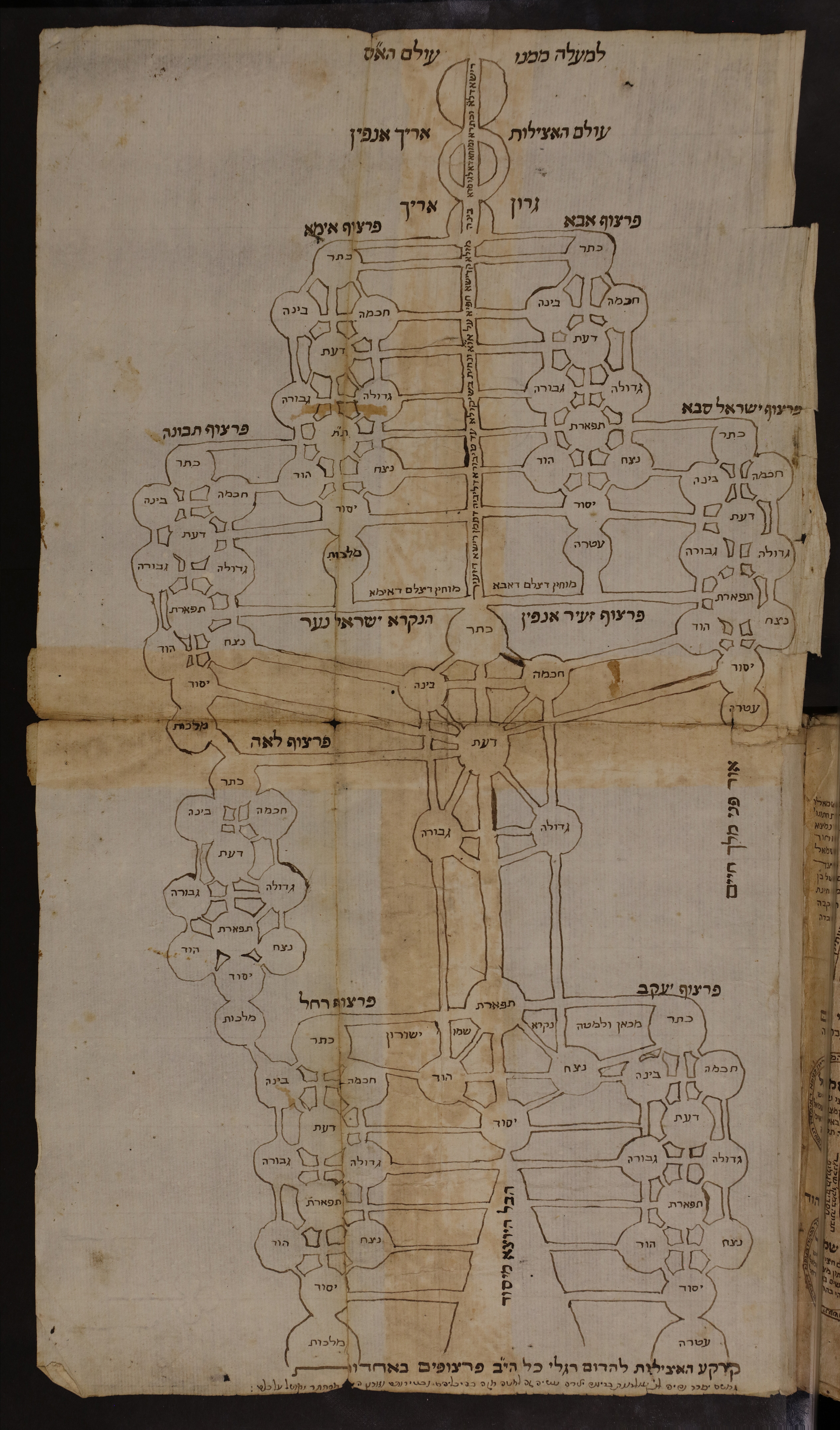
ContextHermeneutical 🛈The usage context of the diagram is for hermeneutical purposes. 🔎︎Search for Ilanot with this Context
Research LiteratureJ. H. Chajes, The Kabbalistic Tree (University Park: Pennsylvania State University Press, 2022), 120–121.
FamiliesẒemaḥ (Lurianic) 🔎︎Search for Ilanot in this Family
Surfaces of the Ilan
204b
About the Manuscript
Identifiers and Titles
IdentifierMoscow (Russia), The Russian State Library: Ms. Guenzburg 53
Primary Manuscript TitlesẒemaḥ Ilan
Alternative Manuscript TitlesMoscow, RSL, Ms. Guenzburg 53
NLI ID990000860800205171
Manuscript History
Origin
ContributorsBenjamin ben Eliezer ha-Kohen Vitale, (Annotator)
Shapira, Natan, (Annotator)
Zacuto, Moses ben Mordecai, (Annotator)
Date Information17th century
Provenance
OwnerThe Russian State Library (current owner)
Provenance PlacesMoscow (Russia)
Physical Description
FormFoldout 🛈Oversized pages in a book, magazine, or atlas which must be unfolded to be viewed. 🔎︎Search for Ilanot with this Form
Support DescriptionFrom page 187, the hand changes
Number of Pages241
Hand DescriptionItalian
Languages Used
Main LanguageRabbinic Hebrew 🛈https://ilanot.org/voc/languages/he-x-rabbinic 🔎︎Search for Ilanot with this Language
Content Description
SummaryThis ilan is a significant witness to Jacob Ẓemaḥ’s "Ilan of the Enrobings". Found within a copy of Ḥayyim Vital’s “Oẓrot Ḥayyim”, the diagram presents a networked array of arboreal parẓufim that visualizes the complex sefirah-to-sefirah interfaces of the Lurianic emanation process. This specific witness exemplifies the pedagogical approach of Moses Zacuto, who recognized the heuristic value of Ẓemaḥ’s work and ensured its inclusion in the copies of Oẓrot Ḥayyim produced under his direction in Mantova. By reviving the iconic arboreal schema, this ilan achieved unrivaled clarity in depicting the core Lurianic theory of hitlabshuyot (enrobings).
Further Information
Find more IlanotSearch for Ilanot on this Manuscript
About the Edition
EditorsUri Safrai 🔎︎Search for Ilanot Editions with this Editor or Contributor
Josef H. Chajes 🔎︎Search for Ilanot Editions with this Editor or Contributor
Maximilian de Molière 🔎︎Search for Ilanot Editions with this Editor or Contributor
Eliezer Baumgarten 🔎︎Search for Ilanot Editions with this Editor or Contributor