Warsaw, Jewish Historical Institute, Ms. 293
About the Ilan
TextGrid URI of the Editiontextgrid:48r0j
FamiliesZacuto (Lurianic) 🔎︎Search for Ilanot in this Family
Surfaces of the Ilan
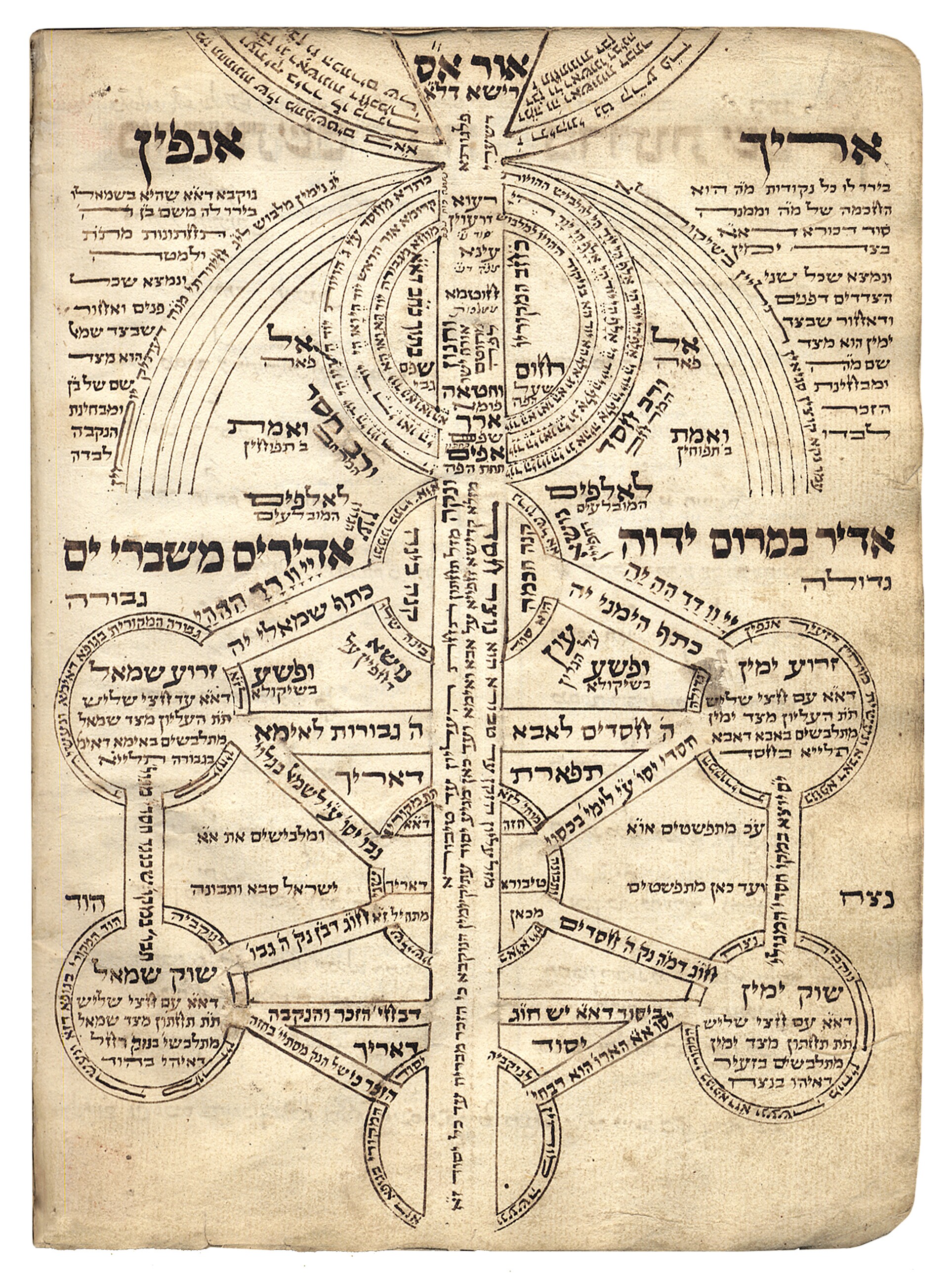
Recto
About the Manuscript
Identifiers and Titles
IdentifierWarsaw (Poland), Library of the Emanuel Ringelblum Jewish Historical Institute: Ms. 293
Alternative IdentifiersLeipzig (Austria), Catalogue Schwarz, Austrian Libraries: 271
Vienna (Austria), Jewish Community of Vienna Library: VI 20
Primary Manuscript TitlesZacuto Ilan
Alternative Manuscript TitlesWarsaw, Jewish Historical Institute, Ms. 293
NLI ID990001177810205171
Manuscript History
Origin
CreatorḤayyim ben Joseph Vital 🔎︎Search for Ilanot by this Creator
ContributorsMoses ben Mordecai Zacuto (Annotator)
Rafael Moreno (Scribe)
Date Information1649
Provenance
Provenance Informationלפנים כ"י וינה הקהלה VI 20 (קטלוג שווארץ 271).
OwnerLibrary of the Emanuel Ringelblum Jewish Historical Institute (current owner) 🔎︎Search for Ilanot by this Owner
Provenance PlacesWarsaw (Poland)
OwnerJewish Community of Vienna Library (former owner) 🔎︎Search for Ilanot by this Owner
Provenance PlacesVienna (Austria)
Physical Description
MaterialPaper 🛈Refers generally to all types of thin matted or felted sheets or webs of fiber formed and dried on a fine screen from a pulpy water suspension. The fibers may be animal, such as hair, silk or wool, or mineral, such as asbestos, or synthetic. However most paper is made from cellulosic plant fiber, such as from wood pulp, grass, cotton, linen, and straw. 🔎︎Search for Ilanot with this Material
Number of Pages179
Hand DescriptionOriental
Languages Used
Main LanguageRabbinic Hebrew 🛈https://ilanot.org/voc/languages/he-x-rabbinic 🔎︎Search for Ilanot with this Language
Content Description
SummaryThis seventeenth-century witness, formerly preserved in the Jewish Historical Institute in Warsaw, served as the master copy of Ḥayyim Vital’s Oẓrot Ḥayyim. It is a document of exceptional historical significance, as it contains the autograph marginalia and diagrams of R. Moses Zacuto (the RaMaZ). In an important note, Zacuto argues that several schematic arrays of the sefirotic configuration rejected by Moses Cordovero in his Pardes Rimonim were, in fact, authentic visualizations of specific parẓufim—most notably Arikh Anpin—of which Cordovero was unaware. To substantiate this transvaluation of classical forms, Zacuto appended his own ilan of Arikh Anpin to the manuscript. This witness became the basis for Zacuto’s effort to distribute Oẓrot Ḥayyim, a project that eventually produced over eighty copies. Although the physical manuscript was stolen from the Institute several decades ago, its contents remain accessible via microfilm.
ColophonOn the Title Page: "שנת ה'ש'ק'ט', מכתיבת ידי הצעיר רפאל מורנו יצ"ו"
Further Information
Research LiteratureYosef Avivi, Kabbalat ha-Ari (Jerusalem: 2008), volume 2, 727–728.
J. H. Chajes, The Kabbalistic Tree (University Park: Pennsylvania State University Press, 2022), 381–382.
Arthur Zacharias Schwarz, Die hebraeischen Handschriften in Oesterreich (Leipzig: 1931), number 271.
J. H. Chajes, The Kabbalistic Tree (University Park: Pennsylvania State University Press, 2022), 381–382.
Arthur Zacharias Schwarz, Die hebraeischen Handschriften in Oesterreich (Leipzig: 1931), number 271.
Find more IlanotSearch for Ilanot on this Manuscript
About the Edition
EditorsJosef H. Chajes 🔎︎Search for Ilanot Editions with this Editor or Contributor
Eliezer Baumgarten 🔎︎Search for Ilanot Editions with this Editor or Contributor
Maximilian de Molière 🔎︎Search for Ilanot Editions with this Editor or Contributor
PublisherThe Ilanot Project, University of Haifa
University of Göttingen
Publication Date2025-02-11
FunderVolkswagen Stiftung Niedersächsisches Vorab - Research Cooperation Lower Saxony – Israel Maps of God - Building a Portal to Visual Kabbalah (Digital Humanities)
The Israel Science Foundation No. 1568/18 (Art, Kabbalah, and Cultural Capital: The Making and Meaning of a Renaissance Cosmographic Masterpiece)
Edition Licencehttps://creativecommons.org/licenses/by-sa/3.0
This resource is published under the CC BY-SA 3.0 licence.
This resource is published under the CC BY-SA 3.0 licence.
Facsimiles
Recto